
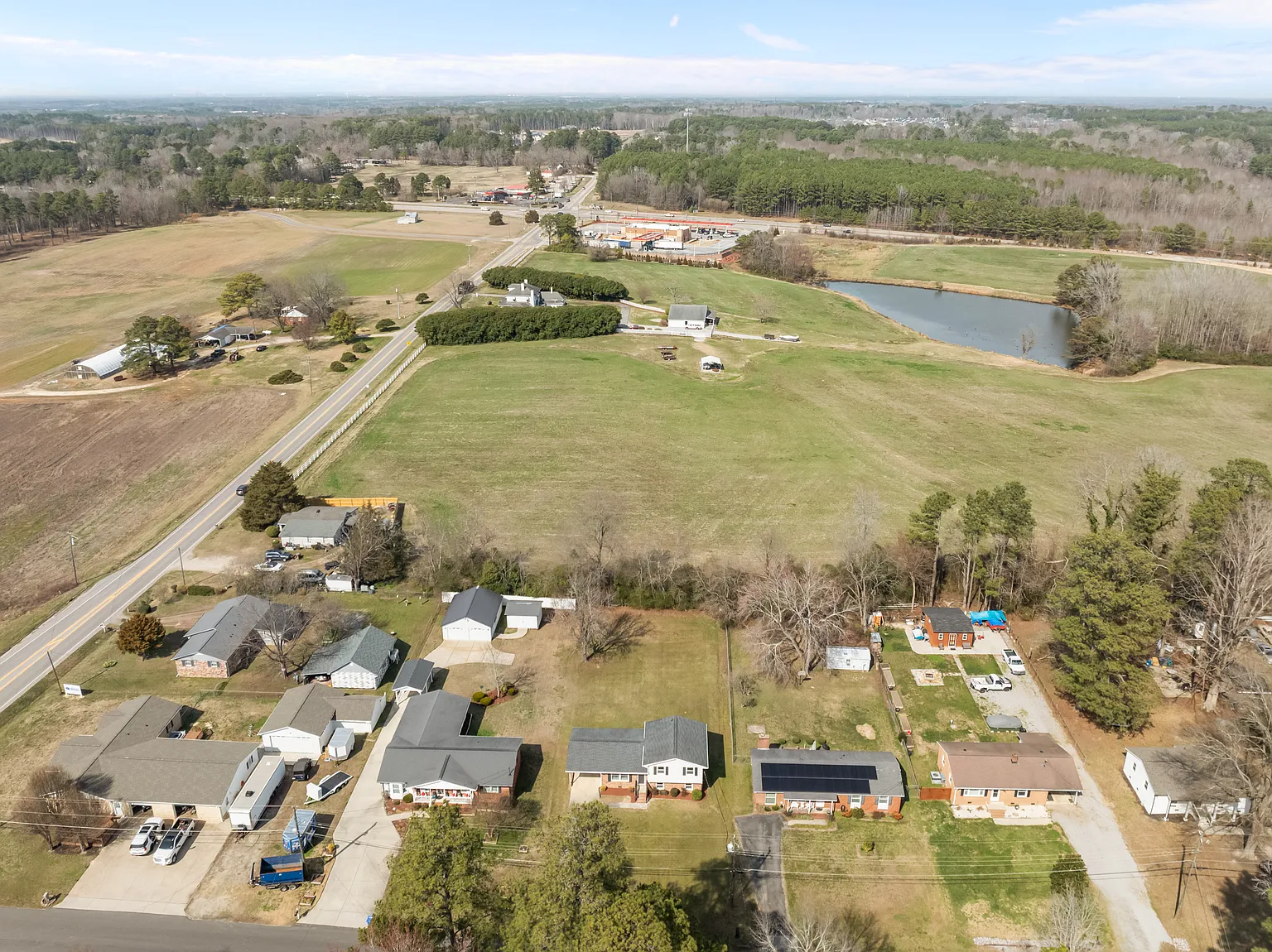
Here is the thing most "selling as-is" advice misses about Sanford: the deal usually doesn't fall apart over a dated kitchen or worn carpet. It falls apart over what's outside the house. A private well 60 feet from the septic tank. A drain field nobody can find permits for. A buried oil tank from the days before the home ran on a heat pump. None of that shows up in listing photos, and all of it can quietly sink a financed buyer in Lee County.
That is the real reason older homes around Sanford sell as-is more often than homes inside Cary or Apex. This guide is about that specific problem — the rural systems and paperwork that decide whether your house can be sold to someone with a mortgage, or whether cash is the cleaner path. We have bought more than 200 houses across North Carolina, and in a county like Lee, the well-and-septic question comes up constantly.
"As-Is" in NC Means Less Than Sellers Think
Quick legal footing, because Sanford sellers waste energy here. North Carolina is a caveat emptor state. On the state disclosure form, an ordinary (non-agent) seller can answer "No Representation" to every line and is under no duty to volunteer the property's condition. So "as-is" isn't some special legal status you switch on. It is mostly a signal: I am not fixing anything, and I'm not promising the next owner I will.
What you cannot do is lie or actively hide a defect you were asked about. Beyond that, "as-is" doesn't stop a buyer from inspecting, and during the due-diligence period it doesn't stop them from walking for any reason at all. That last part matters more in Lee County than people expect, because out here the thing that scares off a buyer is rarely the kitchen. It is the well, the septic, and what a lender's appraiser does when they see them.
The Well and Septic Problem Specific to Lee County
If your house is inside Sanford's city footprint, you are likely on TriRiver Water — the regional utility that took over the city's water service in July 2024 — and on public sewer. Sewer, though, only reaches properties physically tapped into the collection line. Step a few miles out into unincorporated Lee County and the math changes: you are probably on a private well and a septic system. That single fact reshapes how an as-is sale works.
Here is why. North Carolina does not require a septic inspection at the time of sale. There is no point-of-sale rule on the books, and the county won't run one for a real estate transaction. So whether your system gets scrutinized comes down entirely to who the buyer is:
- A cash buyer can choose to skip the inspection, or do one and price around it. No third party can force the issue.
- A financed buyer's lender almost always demands a well test and a septic inspection on a private system. At that point the rules stop being optional.
And the lender rules are unforgiving on older lots. FHA appraisal standards (HUD Handbook 4000.1) want a well at least 100 feet from the septic drain field, 50 feet from the tank, and 10 feet off the property line — distances that can shrink to 75 feet only where local code allows. Plenty of homes platted in Sanford decades ago sit on parcels where the well and field are simply closer together than that. The house is fine. The lot fails the appraisal. A retail buyer using FHA or VA walks, and you are back to square one.
The septic permit paper trail buyers will ask for
North Carolina runs septic systems on a three-permit chain: an Improvement Permit (the soil and site were approved), a Construction Authorization (how the system was built), and an Operation Permit (it was installed and signed off). A careful buyer, and any lender, will want copies. The detail that trips up Lee County sellers: the Operation Permit lists the number of bedrooms the system was sized for. If your house has four bedrooms but the permit says three, that mismatch becomes a financing problem and a disclosure question, even though nothing about the home has changed. A cash buyer can absorb that. An underwriter usually can't.
Buried oil tanks and the second disclosure form
Older Sanford homes that once ran on oil heat sometimes still have a tank in the ground. A buried, abandoned tank is exactly the kind of thing a conventional lender flags and a cash buyer evaluates and moves past. Separately, North Carolina actually requires two disclosure forms on most home sales: the familiar Residential Property and Owners' Association Disclosure, plus a Mineral and Oil and Gas Rights Mandatory Disclosure (G.S. 47E-4.1). Unlike the main form, the parties cannot agree to skip the oil-and-gas form. It is easy to overlook, and most Sanford FSBO sellers do.
Why This Splits the Sanford Market in Two
Put the systems issues together and you get a market that quietly sorts itself into two lanes. Updated homes that pass an appraisal clean compete for retail buyers using FHA, VA, and conventional loans. Older homes with a well-and-septic question, a permit gap, or deferred maintenance get pushed toward the buyers who don't need a lender's blessing.
That is not a knock on your house. It is just how financing works here. The moment an appraiser flags the well distance or the septic, a financed buyer's whole timeline is at the mercy of repairs you may not want to make. (If you're weighing whether to sell at all versus ride out Sanford's growth, that's a different question — we cover the local market in our Sanford selling guide.) For a condition-challenged home, "as-is" is less a strategy than a description of who will realistically buy it.
“Ryan was a pleasure to work with. He made it quick and easy to sell my investment property with no hassle!” — Robert Eckert, Google review
Where a Direct Cash Buyer Fits
This is the gap a company like Cinch fills. We buy houses in Sanford directly, with our own funds — there is no lender behind us, so there is no appraisal to fail and no underwriter to satisfy. A well that sits too close to the drain field, a septic permit that lists the wrong bedroom count, an oil tank in the yard: those are the exact problems that send a financed buyer running, and they are problems we look at, price in, and close around.
It means a Sanford homeowner with an older, condition-challenged property isn't stuck hoping a retail buyer will take on the project and somehow thread their lender's requirements. You have a clean path: a buyer who has already accounted for the work and isn't going to renegotiate after an inspection report lands. We've done it on homes across North Carolina, and rural-systems houses are squarely in what we buy.
| Factor | MLS As-Is Listing | Cinch Cash Offer |
|---|---|---|
| Well & septic inspection | Lender requires it on private systems | Optional — buyer's call |
| FHA/VA appraisal repairs | Well distance, septic, safety can trigger them | None — no appraisal |
| Septic permit / bedroom mismatch | Can stall or kill the loan | Priced in, not a dealbreaker |
| Buried oil tank | Often flagged by underwriter | Evaluated and absorbed |
| Agent commission | 5–6% | $0 |
| Closing costs | 2–3% seller paid | $0 — Cinch covers |
How an As-Is Sale Actually Runs in Lee County
The steps are simple; what's worth knowing is where a Sanford sale differs from a textbook one.
- Walkthrough that includes the yard. A serious cash buyer looks at more than the rooms. On a Lee County property we're checking the well, the septic field location, and whether there's an old tank in the ground — the stuff that decides the number.
- A written offer that already prices the systems. Because we've accounted for the well-and-septic situation up front, the offer reflects it. There is no inspection report later that "discovers" a problem and reopens the price.
- Short or no due-diligence period. With cash there's no lender forcing a well test or septic inspection. If we do verify anything, it's quick — not the multi-week financed-buyer gauntlet.
- A North Carolina closing attorney. NC requires an attorney, not a title company, to handle settlement: title search, deed, and disbursing funds. We coordinate it; you show up and sign. Pull your septic permits beforehand if you have them — it speeds things along.
- Your closing date. Cash can close in about a week, or we'll wait if you need time to clear out a house you inherited or move on your own schedule.
When As-Is Actually Makes Sense in Sanford
For a cosmetically dated but mechanically sound home, you may net more listing it with a local agent and letting a financed buyer compete for it. The as-is cash route earns its keep when the obstacles are the kind a lender can't see past:
- The well sits too close to the septic, or you can't produce a clean set of septic permits
- There's a buried oil tank, a failed system, or repairs running into the thousands that you don't want to front before selling
- You inherited the place and have no interest in managing a renovation from out of town
- You need a date you can count on, not one that hinges on a buyer's appraisal and inspection holding up
Rough rule of thumb: once the needed work and lender-triggered fixes push past roughly $15,000, a cash number often lands close to, or ahead of, what you'd clear after repairs, carrying costs, and a 5–6% commission. The only way to know your number is to get both: a contractor's estimate and a cash offer, side by side.
Frequently Asked Questions
You must provide the forms, but North Carolina is a "buyer beware" state. As an ordinary (non-agent) seller, you can answer "No Representation" on the Residential Property and Owners' Association Disclosure rather than detailing every condition. What you can't do is lie or hide a defect you were asked about. Note that NC also requires a separate Mineral and Oil and Gas Rights disclosure, and that one cannot be waived.
Yes. A failed septic doesn't block an as-is sale — we buy Lee County homes with septic problems regularly and price the repair or replacement into the offer. The catch is on the financing side: a lender will typically require a passing septic inspection, so a financed buyer usually can't close on a failed system. That's the core reason these homes sell for cash. (Don't conceal a known failure if a buyer asks about it.)
It depends on the scope of repairs. When renovation costs exceed $15,000, the net proceeds from a cash sale often match or beat what you would walk away with after paying for repairs, carrying costs during the renovation, and 5–6% in agent commissions. The only way to know for certain is to get both numbers — a contractor estimate and a cash offer — and compare them.
Often not, and on rural Lee County lots the usual culprit is the well and septic. FHA appraisal rules (HUD 4000.1) generally want a well at least 100 feet from the drain field and 50 feet from the tank, reducible to 75 feet only where local code allows. Older Sanford parcels frequently sit tighter than that. Add roof, safety, or structural items and the loan stalls — which is why these homes tend to sell to cash buyers.