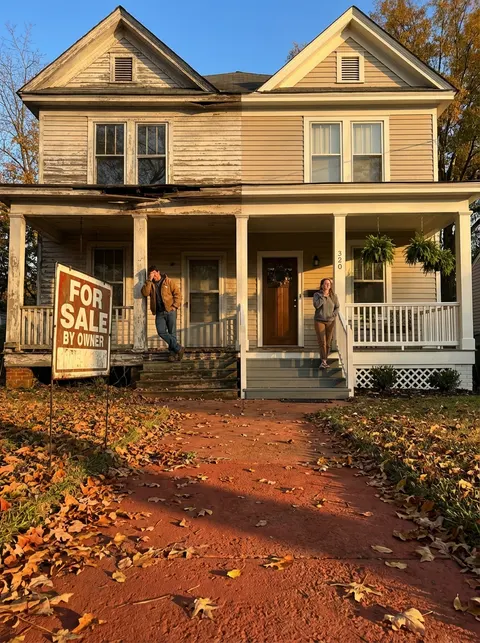
Duplexes and triplexes are the awkward middle children of real estate. Too big for most owner-occupant buyers. Too small for institutional investors. And too complicated for the average listing agent who's used to selling single-family homes with one owner, one key, and zero tenant drama.
If you own a multi-unit property in Durham, Greensboro, or Wilmington and you want to sell, I'll tell you exactly what makes multi-family sales different — and how to actually get it done.
I'm Ryan Smith, founder of Cinch Home Buyers. We buy duplexes, triplexes, and small multi-family properties across North Carolina.
Why Duplexes and Triplexes Are Harder to Sell
A single-family home sells to everyone. Families, couples, investors, first-time buyers. Your buyer pool is as wide as the market gets.
A duplex or triplex sells to a much narrower audience. The primary buyers are:
- Small investors buying for rental income. They're running cap rate and cash-on-cash return calculations, and they'll negotiate harder than a family buying a home.
- House hackers — people who'll live in one unit and rent the other(s). This is growing in popularity, especially in Durham and Greensboro where younger buyers use FHA loans with 3.5% down on properties up to 4 units. But the property must meet FHA livability standards, which rules out many older multi-units with deferred maintenance.
- Occasional owner-occupants looking for multigenerational housing — a unit for themselves and a unit for aging parents or adult children. A small segment.
That's it. You've eliminated the largest buyer category — traditional single-family buyers — by virtue of the property type. This means longer time on market, more price-sensitive buyers, and a higher chance of deal complications.
The Tenant Multiplication Problem
With a single-family rental, you have one tenant to coordinate around. With a duplex, you have two. With a triplex, three. Each one has their own lease, their own rent payment schedule, their own maintenance requests, and their own attitude about cooperating with showings.
In a best case, all units are occupied with cooperative tenants on solid leases paying market rent. That's actually attractive to investor buyers — they're buying a stabilized income stream.
In reality? One unit is occupied by a great tenant. One has a tenant who's two months behind. And the third unit has been vacant for four months because the last tenant's dog destroyed the flooring and you haven't had the $6,000 to replace it.
That mixed condition — some units performing, some not — is the most common scenario I see in NC duplexes and triplexes. And it's the hardest to sell on the MLS because you can't show the property as purely a stable investment (the vacancy and delinquency argue otherwise) and you can't show it as a renovation opportunity (two-thirds of it is occupied).
The Financing Gap
Here's a technical problem that catches sellers off guard.
Properties with 1-4 units can still qualify for residential financing — FHA, VA, and conventional mortgages. That's good news for seller demand. But the requirements are stricter than for single-family.
FHA requires the buyer to occupy one unit as their primary residence (the house-hack model). The appraiser evaluates both the property's condition and its income potential. If rents are below market or units are vacant, the appraisal may come in low. FHA also has self-sufficiency requirements for 3-4 unit properties — the rental income from the non-owner units must cover a certain percentage of the total mortgage payment.
Conventional lenders require higher down payments for investment properties — 20-25% for a duplex the buyer won't live in. That eliminates buyers who don't have $50,000-$75,000 in cash for a down payment on a $250,000 duplex.
VA loans cover multi-units up to 4 units with zero down — but the buyer must live in one unit and the property must meet VA minimum property requirements. Older duplexes with deferred maintenance often fail these requirements.
The net result: fewer buyers qualify for multi-unit financing compared to single-family, which limits your buyer pool further.
Single-family homes are valued by comparable sales. Multi-unit properties can also be valued using the income approach — what's the net operating income and what cap rate does the market support? In Durham and Greensboro, investor buyers expect 6-9% cap rates on small multi-family. Know your NOI (gross rent minus operating expenses) and you'll have a much better idea of what an investor will offer.
Market-Specific Dynamics
Durham
Old West Durham, East Durham, and areas near Downtown Durham have significant duplex and triplex inventory — many converted from single-family during the mid-20th century. These properties are in high demand from both investors and house-hackers because Durham's rental market is strong. But the older buildings often have deferred maintenance, shared utility meters (a financing complication), and nonconforming zoning that limits future expansion.
Greensboro
The neighborhoods around UNCG and A&T University have heavy multi-family inventory. Student rentals are a specific niche — tenants turn over every year, damage is common, and the properties tend to be maintained at the minimum viable level. Selling a student rental duplex in Greensboro requires an investor buyer who understands the student market and is comfortable with the turnover.
Wilmington
Multi-unit properties in Wilmington near UNCW and the downtown area face the added complication of coastal insurance costs. The insurance burden that's tough on a single-family home is worse on a multi-unit — three sets of appliances, three HVAC systems, three times the liability exposure. Premiums on multi-unit properties in New Hanover County can be staggering.
"I had four rental properties bleeding me dry. Ryan bought all four in one closing. I got my life back." — Kevin M., Greensboro
| Factor | MLS Listing | Cash Sale to Cinch |
|---|---|---|
| Buyer pool | Small investors, house-hackers only | Direct purchase, no buyer search needed |
| Tenant coordination | Multiple showings across all units | One walkthrough, tenants stay in place |
| Financing risk | FHA/VA/conventional can fall through | No financing contingency |
| Appraisal required | Yes — mixed occupancy often lowers value | No appraisal needed |
| Time to close | 60-120 days typical | 14-21 days |
| Repairs required | Often required to pass inspection | Purchased as-is, any condition |
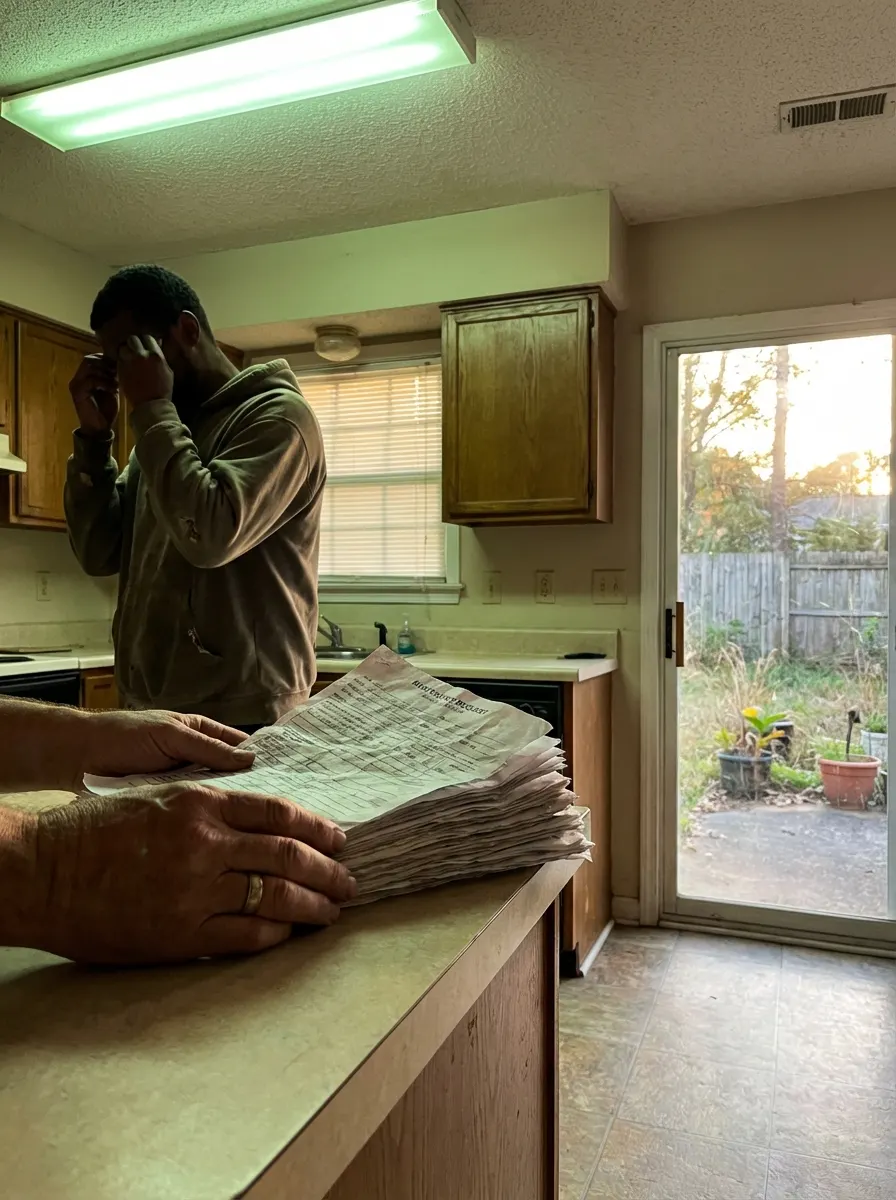
Selling Your Multi-Unit to a Cash Buyer
We buy duplexes and triplexes the way we buy everything — as-is, tenants in place, no financing contingencies, close in 14-21 days.
For multi-unit properties specifically, the advantages of a cash sale are amplified:
- No coordinating showings across multiple tenants. We do one walkthrough. We don't need to schedule around three different tenant schedules over multiple weeks.
- No appraisal complications. Mixed occupancy, below-market rents, deferred maintenance in vacant units — none of these affect our ability to close.
- No financing self-sufficiency calculations. We use our own funds. The property's income ratios are irrelevant to our purchase.
- No lease complications. We inherit whatever leases exist. Month-to-month, long-term, expired and holdover — all fine.
We make an offer based on each unit's condition, current and potential rents, location, and comparable sales in the area. The offer is detailed — you'll see the math for each unit, not just a single number with no explanation.
If you've been thinking about selling and the tenant situation or the property condition has been holding you back, read our guide on selling rentals with tenants and how a Greensboro landlord sold four properties. Then call us.
(919) 751-6768. We buy duplexes, triplexes, and small multi-family across North Carolina.
Frequently Asked Questions
Duplexes can be valued using comparable sales (like single-family) or the income approach, which calculates value based on net operating income and market cap rates. Investor buyers primarily use the income approach, expecting 6-9% cap rates in most NC markets.
Yes. Existing leases transfer to the new owner. Cash buyers purchase fully occupied multi-units without requiring tenant removal or lease renegotiation. This is actually preferred by many investor buyers who want immediate rental income.
Multi-unit properties typically take 60-120 days on the MLS due to the smaller buyer pool. Cash sales close in 14-21 days regardless of tenant occupancy, condition, or financing complications.
No. The property is listed and sold as a single parcel. The listing should include details for each unit — rent amounts, lease terms, unit condition, and number of bedrooms/bathrooms per unit — to help investor buyers evaluate the income potential.
Cash buyers purchase multi-units in mixed condition — some units performing, some vacant, some needing significant work. We evaluate each unit independently and factor all conditions into a single portfolio-style offer.