
Almost every NC seller who calls me is anchored to the wrong number. They've pulled up a Zestimate, glanced at the tax value on their county portal, and split the difference in their head. Neither of those numbers is what a buyer will actually pay, and in North Carolina the gap between them can be enormous because of how this state handles property reassessment.
I've bought more than 200 homes across NC since starting Cinch, and I'll tell you the single most common pricing mistake I see: trusting the tax-assessed value. Sellers assume the county "appraised" their house, so the number must be close. In a state where counties only reappraise every eight years, that tax value can be five or six years stale, frozen at a market that no longer exists.
This guide is built around the three numbers every NC seller confuses, and how to find the one that's real. We'll cover NC's reappraisal cycle, how to read recorded deeds to back out true sold prices, what condition actually does to your number, and the honest net math on a cash sale versus the MLS. No generic advice that works just as well in Nebraska.
The Three Numbers (And Only One Is Real)
When you try to price a home in North Carolina, you're staring at three different figures. They rarely agree, and confusing them is how sellers either chase an unrealistic list price for months or hand away equity they didn't have to.
1. The Zestimate. Useful as a rough starting range, dangerous as a list price. Zillow's own data put its median error on off-market homes around 7% in 2025, compared with under 2% for homes already actively listed. On a $300,000 NC home, a 7% miss is roughly a $21,000 swing in either direction. The algorithm is weakest exactly where NC sellers need it most: thin-comp rural Piedmont counties and coastal markets where insurance distorts pricing.
2. The tax-assessed value. This is the trap. North Carolina law requires counties to assess at 100% of market value, but because the state only mandates a full reappraisal every eight years (more on that below), your tax value can drift badly between cycles. In practice, assessed values mid-cycle often sit at roughly 70-80% of true market value. So a seller who anchors to the tax value usually underprices a healthy home, while a seller in a county that just reappraised may overprice one. The tax value tells you what the county is billing you on, not what a buyer will pay.
3. The real sold-comp value. This is the only number that matters: what comparable homes near you actually closed for, recorded as public deed transfers. It's harder to get than the other two, which is exactly why most sellers skip it. The rest of this guide is mostly about how to find this number for your specific NC home.
Why NC Home Pricing Isn't One-Size-Fits-All
North Carolina has several distinct real estate markets, and they don't move together. Understanding which market your home sits in is the first step to pricing it correctly.
The Triangle (Wake, Durham, Orange, Chatham counties): This remains the state's most competitive market, driven by Research Triangle Park employment, in-migration from the Northeast and Mid-Atlantic, and university proximity. Wake County saw median home prices hold above $400,000 into early 2026 despite higher interest rates thinning buyer activity. Homes priced right still move. Homes priced 5% over market sit, accumulate days-on-market stigma, and eventually take a price cut that costs more than the original gap.
The Triad (Guilford, Forsyth, Alamance counties): More affordable entry points but a thinner buyer pool. Greensboro and Winston-Salem buyers are price-sensitive. An overpriced home in Guilford County doesn't just sit — it disappears from filtered search results as newer listings cycle in. Getting the price right the first week matters even more here.
Charlotte metro (Mecklenburg and surrounding counties): Corporate relocation demand keeps this market active. South End and Dilworth condos, suburban Union County ranches, Lake Norman lakefronts — these submarkets each have their own comps. Mecklenburg County's GeoPortal is one of the better public tools in the state for pulling raw deed transfer data.
Coastal NC (Brunswick, New Hanover, Dare, Carteret counties): Insurance costs are reshaping buyer math here in a way the rest of the state doesn't see. Combined homeowners and flood insurance on a Cape Fear coast home can run $6,000 to $10,000 per year. Buyers build that into their monthly payment math, which effectively pulls down what they'll offer. Zestimates miss this entirely.
Find Out What Your NC Home Is Worth in Cash
Get a no-obligation offer based on real county comps. Takes 60 seconds.
Why NC's 8-Year Reappraisal Cycle Wrecks Your Tax Value
This is the part almost no pricing guide explains, and it's the reason NC tax values are so unreliable for pricing. Under North Carolina General Statute 105-286, every one of the state's 100 counties must reappraise all real property at least once every eight years. That's called the octennial cycle. Some larger counties reappraise more often, but the eight-year minimum is the rule.
Here's what that means for your number. Between reappraisals, your tax value is frozen. If your county last reappraised in 2018 and the next one lands in 2026, your "assessed value" reflects a 2018 market that doesn't exist anymore. North Carolina law also forces a county with a population of 75,000 or more to reappraise sooner if its sales-assessment ratio drifts below 0.85 or above 1.15 — meaning the state itself acknowledges these values go stale.
Timing matters right now. A large group of NC counties, including Buncombe, Henderson, Pender, and Avery, are running 2026 reappraisals. If you're in one of those, your brand-new tax value is close to current market and worth a look. If your county isn't due for years, treat the tax value as historical, not current.
Quick check: Find your county's last reappraisal year on its tax administration page. The further you are from that date, the more your tax value lags real prices. A value six or seven years into a cycle in a hot Triangle or Charlotte submarket can be tens of thousands of dollars under what your home would actually fetch today.
How to Pull Real Comps in Your NC County
The only number that prices a home is what comparable homes nearby actually closed for. Not list prices, not the county's frozen value. Sold prices.
In North Carolina, every deed transfer is public record at the county Register of Deeds. Most counties have online search tools. Wake County has its Real Estate Search at raleighnc.gov; Mecklenburg uses the GeoPortal; Guilford's Tax Assessor site lists recent sales by neighborhood. These show raw recorded prices with no algorithm in the middle.
There's one NC trick most sellers never use. When you find a comparable deed but the sale price isn't printed, you can back it out from the excise tax stamps recorded on the deed. North Carolina charges $1 of excise tax per $500 of sale price, so multiply the stamp amount by 500 and you've got the sale price within a $500 bracket. If a deed shows $700 in excise stamps, that home sold for roughly $350,000. It's a free way to verify a comp the assessor hasn't caught up to yet.
When you pull comps, look for homes sold in the last 90 days, within a half-mile, with similar square footage, bedroom count, age, and condition. A remodeled kitchen on a comp means you adjust your number down if yours is original. In a neighborhood with few recent sales — common in rural Piedmont or mountain counties — widen to six months or a full mile, and accept a wider price range. Thin data is itself information: it tells you the market is harder to read here, which matters before you commit to a list price.
NC-specific tip: Pull deeds directly from your Register of Deeds, or ask a local agent to run MLS comps. MLS data adds what public records can't: condition notes, days on market, and whether the sale was arm's-length. A bargain sale between relatives is a recorded deed too, and it will quietly drag your estimate down if you treat it as a real comp.
What Repairs Actually Affect Your Home Price in NC
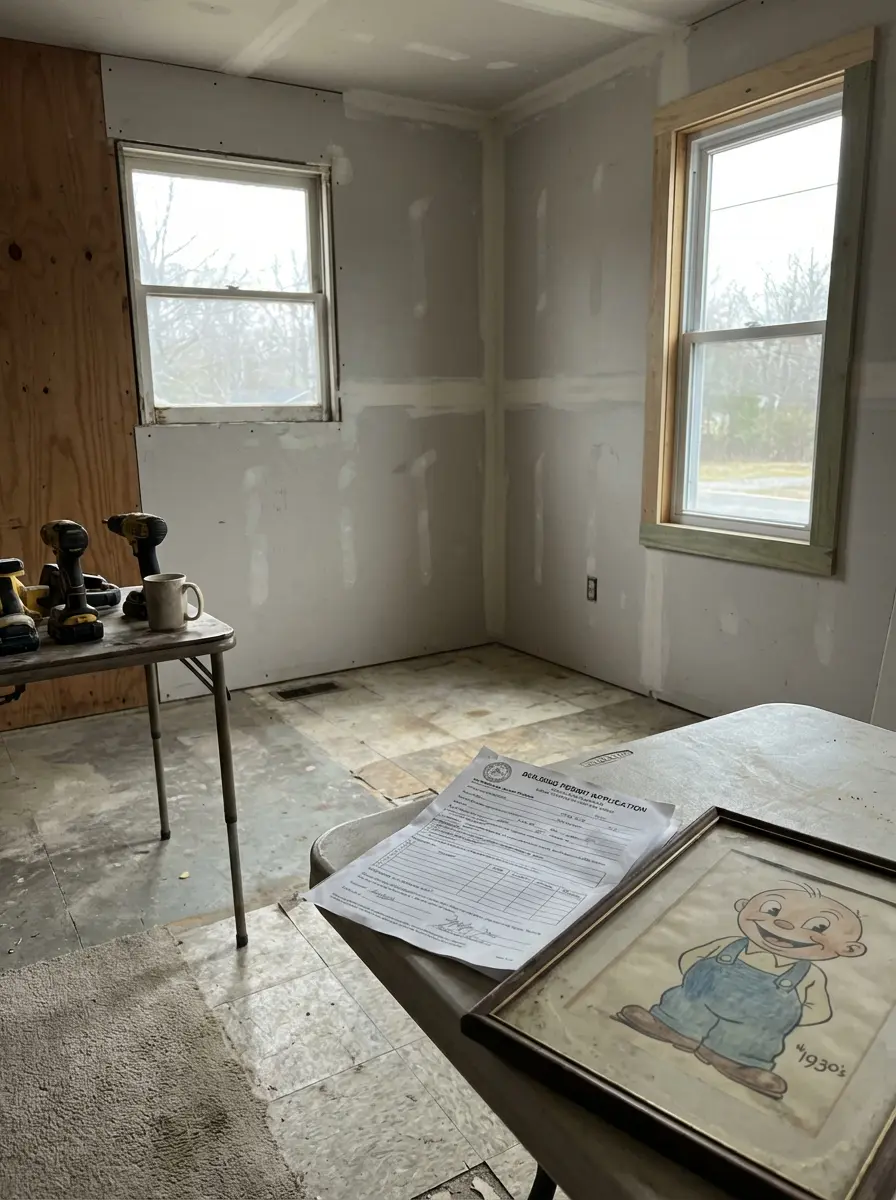
Not all repairs are equal. Some have a real dollar impact on what buyers will pay or what a lender will approve. Others are cosmetic and affect presentation more than price.
High-impact repairs — these directly affect financing and offers:
- Roof condition: NC home inspectors flag roofs over 15 years old. If the roof is failing, most conventional and FHA lenders won't approve financing until it's replaced. A new roof in Wake County runs $8,000 to $14,000 for a standard residential home. If you can't or don't want to pay for it, you're effectively limited to cash buyers or heavily discounted MLS pricing.
- HVAC age and function: A non-functioning HVAC system is a deal-killer in a state where summer temperatures regularly hit 95 degrees. Lenders require working heat and cooling. Replacement costs $5,000 to $12,000 depending on the system.
- Foundation and crawl space: NC's clay-heavy soils and humid climate make foundation settling and crawl space moisture common. A structural engineer's report showing active movement can kill a retail deal. Remediation can run $10,000 to $40,000. These are the conditions where cash buyers, who aren't subject to lender appraisal requirements, often make more sense than the MLS.
- Water intrusion and mold: NC humidity means mold shows up often. A serious mold report scares retail buyers and sometimes voids homeowners insurance for the buyer. Cash buyers price it in; retail buyers walk.
Lower-impact repairs — affect presentation, not financing: Interior paint, carpet, landscaping, and outdated fixtures all help with photos and showings. They rarely return dollar-for-dollar and don't change appraised value. If your home needs only cosmetic work, a traditional listing still makes sense. If it needs structural or mechanical work, run the net math on both paths before committing to either.
NC Home Values by Region - What the 2026 Market Looks Like
These are actual ranges based on recent county deed transfers, not algorithm estimates.
| Region | Median Sale Price Range | Avg. Days on Market |
|---|---|---|
| Wake County (Triangle core) | $380,000 - $460,000 | 28 - 45 days |
| Durham / Orange County | $340,000 - $420,000 | 30 - 50 days |
| Mecklenburg County (Charlotte) | $360,000 - $440,000 | 25 - 40 days |
| Guilford County (Greensboro) | $220,000 - $300,000 | 40 - 65 days |
| Forsyth County (Winston-Salem) | $210,000 - $285,000 | 45 - 70 days |
| New Hanover County (Wilmington) | $350,000 - $460,000 | 50 - 80 days |
| Brunswick County (coastal) | $310,000 - $420,000 | 60 - 90 days |
How a Cash Offer Number Gets Built
Cinch buys directly for cash, so when I price a property there's no commission, no listing, and no third party in between. The math is simple enough that you can run it yourself. Start from after-repair value, subtract what it costs to get there, and subtract the work the house needs:
ARV × 70% − Estimated Repairs = Cash Offer
ARV is what your home would sell for fully renovated, built from the same recorded NC sold comps you just learned to pull. The 70% is everything between buying and reselling: renovation, holding costs while the project runs, the costs to sell it again, and the margin that lets me keep doing this. The repair figure comes from an actual walkthrough at current contractor prices in your county. What you receive is a net number, not a headline price you then watch get whittled down by fees.
A 2025 Wake County purchase: ARV of $380,000 from three sales in the same subdivision. Repairs totaled $40,000 (roof $12K, HVAC $8K, kitchen $15K, cleanup $5K). The offer: $380,000 × 70% = $266,000, minus $40,000 = $226,000 cash, closing in 10 days. The seller had two MLS estimates suggesting a $285,000-$295,000 list price, but neither counted the $40,000 of repairs needed before listing, two to three months of payments while it sat, commissions, or the risk a financed buyer's appraisal would fall short. The list price was bigger; the number that actually reached the seller was not.
The Actual Net Math: Cash Offer vs. MLS in NC
Here's a side-by-side using real NC costs for a home in the Triangle that needs moderate work.
| Cost Item | List on MLS ($320,000 ask) | Cinch Cash Offer |
|---|---|---|
| Sale price | $308,000 (after typical 4% negotiation) | $204,000 |
| Agent commission (5.5%) | -$16,940 | $0 |
| NC excise tax ($1 per $500) | -$616 | $0 (Cinch pays) |
| Closing attorney | -$1,100 | $0 (Cinch pays) |
| Repairs before listing | -$18,000 | $0 |
| Carrying costs (65 days avg) | -$4,500 | $0 (close in 7-10 days) |
| Inspection repair credits | -$4,000 (typical) | $0 |
| Actual net to seller | $262,844 | $204,000 |
In this scenario, the MLS still nets more — but only if you have $18,000 to put toward repairs before listing, can cover two months of mortgage payments while it sits, and can absorb the risk that a buyer's financing falls through after the inspection. Many NC sellers facing a distressed home can't do all three. Run the same math with $45,000 in repairs and the MLS net shrinks fast. The question is never "which number is bigger." It's which path you can actually execute.
NC Closing Costs Sellers Often Miss
Most online pricing guides skip the NC-specific closing costs. These aren't optional.
- NC excise tax (revenue stamps): Under G.S. 105-228.30, the rate is $1 per $500 of sale price, paid by the seller at closing. On a $350,000 home that's $700. Watch out: plenty of online guides quote double this by mistake. The real rate is $1 per $500, or equivalently $2 per $1,000.
- Closing attorney fee: North Carolina is an attorney-closing state. Every transaction closes through a licensed NC real estate attorney. Budget $800 to $1,500. With Cinch, we cover this.
- Property tax proration: NC property taxes are paid in arrears, and unless your contract says otherwise they're prorated on a calendar-year basis. You owe taxes from January 1 to your closing date. If the current year's bill hasn't been issued yet, the closing attorney prorates off the prior year's number. On a $350,000 Wake County home at roughly a 1% effective rate, expect up to about $3,500 prorated to the day you close.
- Delinquent prior-year taxes: Easy to forget. Any unpaid taxes from past years are not prorated. The attorney's tax search will catch them and they come out of your proceeds in full at closing so the buyer takes clean title.
- HOA transfer fees: In an HOA, budget $100 to $500 for the transfer fee plus any prorated dues balance.
Frequently Asked Questions About Pricing Your NC Home
How accurate is Zillow for NC home values?
Is my NC tax-assessed value the same as market value?
Do I need a closing attorney to sell my house in NC?
What is the NC excise tax and who pays it?
How do I find real sold comps in my NC county?
What repairs actually affect my NC home's price?
Where to Go From Here
If your home is in solid condition and you have the time and capital to go the MLS route, pull real county comps, talk to a local agent about a CMA, and price it based on what actually sold nearby in the last 90 days — not what Zillow says and not what you paid.
If your home needs work, or you need to move faster than a retail sale allows, the cash route deserves a real look. Get a cash offer, do the net math yourself with the actual NC closing costs, and compare it against the MLS scenario with repairs and carrying costs factored in. The right answer depends on your specific home and situation — not a generic national formula.
Cinch buys homes all over North Carolina. We buy in Raleigh, where the Triangle market moves fast, and we buy in markets where it moves slower. If you're in the Charlotte area, see how the Charlotte cash sale process works. If you're in Raleigh or Wake County, learn about our Raleigh home buying process. Or if you're anywhere else in the state, get started with a statewide cash offer request.
I'll show you the comps I'm using, walk through the repair scope with you, and give you a number you can verify against your own county records. If selling to me doesn't make sense for your situation, I'll tell you that too. I've bought 200-plus homes in this state — I'm not going anywhere, and my reputation here matters more than any single deal.