
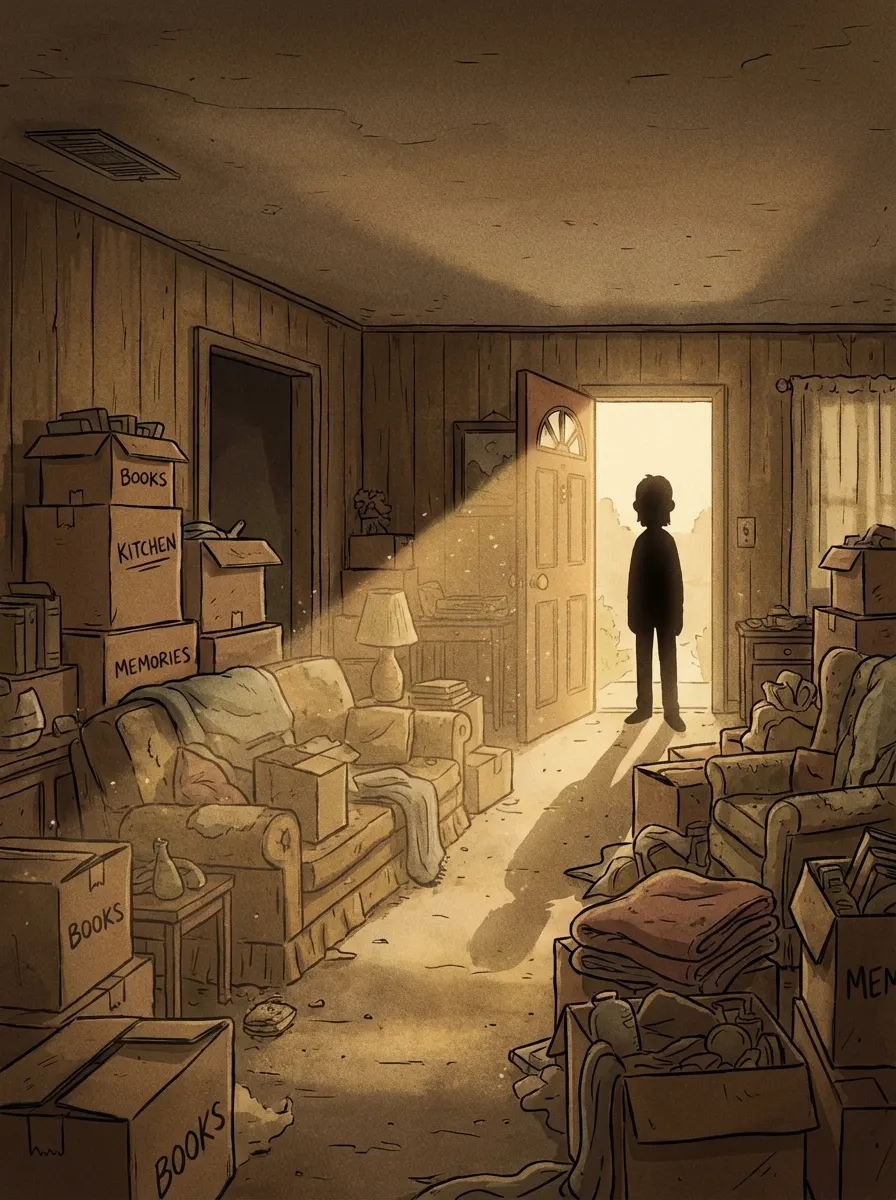
You opened the front door and your stomach dropped. Floor to ceiling. Every room. Newspapers from 2009. Grocery bags inside of grocery bags. Paths worn through the clutter just wide enough for one person to shuffle through. The kitchen — you couldn't see the counters. The bathroom — you didn't want to look.
Your parent was a hoarder. And now you own this house.
This is more common than people think. Hoarding affects an estimated 2% to 6% of the population, and the families left behind almost never know the full extent until they walk in after the funeral. The shame that kept the door closed for years doesn't disappear when the key passes to you. It just transforms into a different kind of overwhelm.
I've bought hoarder houses in Durham, Fayetteville, Wilson, and across central North Carolina. I'm going to tell you exactly what to expect, what it costs, and what your real options are.
What You're Actually Dealing With
A hoarder house isn't just cluttered. It's structurally and environmentally compromised in ways you can't always see.
Biological hazards. Animal waste (many hoarders also collect animals), rodent infestations, mold growth under and behind piles of belongings, expired food, and in severe cases, human waste. This isn't a cleaning job — it's a hazmat situation.
Structural damage. Years of moisture trapped against walls by piled-up belongings creates rot. Floors weaken under the weight of accumulated materials. I've seen second-story floors sagging visibly in Durham houses because of the sheer tonnage of stuff stored on them. Plumbing leaks go undetected for years because nobody can access the pipes.
Pest infestation. Roaches, mice, rats, and sometimes worse. The clutter provides perfect nesting conditions. I walked into a house in Cumberland County where the rat population was audible before I got through the front door.
Fire hazard. Blocked exits, piles of paper and fabric near heat sources, overloaded electrical outlets buried under debris. Many hoarder houses are one bad wire away from a structure fire.
None of this means the house is worthless. It means the house needs specific handling — and the right buyer.
The Cleanout: What It Actually Costs
Let's talk numbers. Professional estate cleanout for a moderate hoarder house in North Carolina:
- Level 1 (cluttered but accessible): $3,000-$8,000. Every room has excess stuff but you can walk through. No major biological hazards.
- Level 2 (pathways only, some rooms inaccessible): $8,000-$15,000. Significant accumulation. Some pest evidence. Minor structural concerns.
- Level 3 (severe hoarding, hazmat conditions): $15,000-$30,000+. Full hazmat crew needed. Animal waste remediation. Mold remediation. Multiple dumpster loads. Sometimes the cleanout requires removing a wall or door frame to get materials out.
That's just the cleanout. Once the house is empty, you'll see the damage that was hidden. Budget another $10,000 to $40,000 for repairs — flooring replacement, drywall repair, plumbing fixes, possible subfloor replacement, mold remediation behind walls, and a deep sanitization of the entire structure.
Total investment to make a severe hoarder house "market ready"? $25,000 to $70,000. And even then, some buyers will walk away when they learn the property's history — stigma is real in residential real estate.
Can You List a Hoarder House on the MLS?
Technically, yes. Practically? It's a nightmare.
Most agents won't take the listing until the house is cleaned out. They can't show it with stuff piled to the ceiling — buyers literally can't walk through it, and the liability issues are serious. One wrong step on an unstable pile and someone gets hurt. The agent's E&O insurance doesn't cover that scenario.
Even after cleanout, the house often needs so much work that conventional buyers can't get financing. Banks don't lend on properties with major structural issues, pest infestations, or mold. That eliminates 80% of your buyer pool right there.
You're left marketing to investors and cash buyers anyway — but after spending $20,000+ on cleanout and repairs. That math rarely works in the seller's favor.
“The house was full of 30 years of stuff. I couldn't deal with it. Cinch bought it as-is and I never had to clean out a single room.” — Barbara P., Raleigh
Hoarder houses frequently contain hidden cash, jewelry, important documents, and valuable collectibles buried in the clutter. Before any cleanout crew touches the property, do a careful sweep of common hiding places: inside books, under mattresses, in coffee cans, inside jacket pockets, taped under drawers, and in freezers. We've found thousands of dollars in cash, stock certificates, and family jewelry in houses we've purchased. Take your time with this step.
The As-Is Cash Sale — Why It Usually Makes Sense
Here's the scenario I see most often. Family inherits a hoarder house. They get quotes for cleanout — $12,000. They get quotes for repairs after cleanout — another $18,000. The house might sell for $160,000 after all that work. Minus 6% agent commission ($9,600), they'd net about $120,000 after all expenses. Timeline: 4-6 months.
Or they sell to us as-is — with everything in the house — for $115,000. No cleanout cost. No repair cost. No commission. Close in two weeks. Net proceeds: approximately $112,000.
The difference is $8,000. For six months of work, stress, and risk. Most families take the cash offer.
And that's the moderate scenario. For severe hoarder houses where cleanout and repairs push $50,000+, the cash offer frequently nets more than the traditional route.
| Factor | Clean Out + List on MLS | Sell As-Is to Cinch |
|---|---|---|
| Cleanout Cost | $3,000–$30,000+ | $0 — we handle it |
| Repair Cost After Cleanout | $10,000–$40,000 | $0 — we buy as-is |
| Agent Commission | 5–6% of sale price | No commissions or fees |
| Timeline | 4–6 months (cleanout + listing + closing) | 7–14 days to close |
| Typical Net (moderate hoarder house) | ~$120,000 | ~$112,000 |
What We Do Differently with Hoarder Properties
We don't judge the condition. I've walked through houses where the accumulated belongings reached the ceiling. Houses where I needed a respirator. Houses where the family apologized six times before I got through the front door. None of that changes the math. I'm looking at the structure, the lot, the location, and the after-repair value.
We walk the property even when it's hard to walk. Some cash buyers will drive by a hoarder house, guess at the condition, and make an embarrassingly low offer. We go inside. We assess the actual structural condition as best we can given the circumstances. Our offer reflects reality — not a worst-case guess from the driveway.
We handle everything after closing. The cleanout, the hazmat remediation, the repairs, the pest treatment — all on us. You sign the deed, collect your check, and never think about that house again.
We've bought hoarder houses in Durham's Walltown neighborhood. Off Ramsey Street in Fayetteville. In Wilson near downtown. On back roads in Johnston County. The location doesn't matter. The condition doesn't scare us. We've seen it all and we've bought it all.
The Emotional Side Nobody Talks About
Selling a hoarder house isn't just a real estate transaction. It's processing grief, embarrassment, and sometimes anger all at once.
You're grieving a parent. You're processing the reality of their mental illness — one they may have hidden from you for years. You're embarrassed about the condition of the house, even though it's not your fault. You might be angry that they let it get this bad. All of that is normal.
I'm not a therapist. I'm a house buyer. But I've sat with enough families in this exact situation to know that the fastest path to peace of mind is getting the house resolved. As long as it sits there — full of stuff, full of memories, full of problems — it weighs on you. Every day.
Selling doesn't mean forgetting. It means choosing to move forward. And sometimes the kindest thing you can do for yourself is hand the keys to someone who can handle it.
If you've inherited a hoarder house anywhere in North Carolina and you're not sure where to start, read our guide on selling inherited property. Or just call us. We'll tell you what the house is worth in its current condition — even if that condition involves a living room you can't see the floor of. No judgment. Just a fair number and a clear path forward.
Frequently Asked Questions
Professional cleanout costs range from $3,000–$8,000 for moderate hoarding to $15,000–$30,000+ for severe cases requiring hazmat crews. This doesn’t include repairs needed after the cleanout, which can add another $10,000–$40,000.
Yes. Cash buyers like Cinch purchase hoarder houses as-is, with all contents included. You don’t need to clean, remove belongings, or make any repairs. We handle everything after closing.
Generally no. Conventional lenders require the property to be habitable and free from major health hazards. Hoarder houses with pest infestations, mold, or structural damage won’t pass a standard appraisal or inspection. This is why most hoarder houses sell to cash buyers.
We physically walk the property to assess the structural condition, then calculate the after-repair value based on comparable sales in the neighborhood. We subtract estimated cleanout costs, repair costs, and our margin to arrive at the offer. You see all the math.
In the retail market, yes — some buyers avoid properties with hoarding history even after full remediation. This is another reason selling to a cash buyer who plans to renovate makes sense. After our renovation, the property’s history doesn’t affect its resale value.